Best vacuums for high pile carpet
Quick answer
High pile carpet needs agitation from a full-size, driven brush roll more than raw suction, which rules out most robot vacuums for this job. The Dyson Ball Animal 3 ($409.99) is the strongest all-around pick, with a self-adjusting cleaner head built for varying pile heights. Budget shoppers should look at the Hoover WindTunnel High Capacity ($149.99). For the deepest embedded soil, the Dyson Ball Animal 3 Extra ($549.99) sits at the top of the upright category here.

Dyson Ball Animal 3
The Dyson Ball Animal 3 uses a self-adjusting cleaner head that changes height automatically between floor types, which matters on high pile since a fixed-height head either rides on top of long fibers or drags too low and stalls. At $409.99 it sits between the mid tier and the top-of-catalog Extra model below, delivering most of the agitation benefit of the flagship without the extra tools bundled into the Extra kit.
The three tiers
Beginner: Hoover WindTunnel High Capacity
A household with high pile carpet in one or two rooms on a tight budget.- Beginner pick
Hoover WindTunnel High Capacity Upright Vacuum (UH71150V)
$149.99 Check pricePrices change often

The WindTunnel line uses a full-size, motor-driven brush roll rather than a small stick-vacuum head, the baseline requirement for working fiber loose in longer pile. The listing states a HEPA filter and a high-capacity bagless bin sized for larger areas between empties. At $149.99 it is the least expensive full-size upright here.
Not for: A large home with high pile carpet throughout, where the smaller bin and single-speed brush roll need more frequent stops than a household covering more square footage may want.
Intermediate: Bissell PowerClean DualBrush
A household that wants stronger, dual-roller agitation than an entry-level single-brush upright provides.- Intermediate pick
Bissell PowerClean DualBrush 280W Self-Standing Vacuum, 4196K
$259.99 Check pricePrices change often

The PowerClean DualBrush pairs two brush rolls rather than one, aimed at working more fiber loose per pass, and Bissell rates the motor at 280 watts. It is a self-standing, cordless design, so it stores upright without a closet or wall bracket. At $259.99 it is a real step up in agitation design from the entry-level Hoover.
Not for: A very large home where cordless runtime becomes a limiting factor, since a corded upright needs no mid-clean recharges regardless of floor area.
Expert: Dyson Ball Animal 3 Extra
A household with substantial high pile or shag carpet, or heavy pet traffic on carpet, that wants the top of the catalog and no runtime limit.
The Ball Animal 3 Extra is a corded, full-size upright built around Dyson's self-adjusting cleaner head and ball-steering chassis, with an expanded tool set for stairs and upholstery in the Extra kit. Being corded removes any runtime ceiling, which matters for a large area of thick carpet that would otherwise need battery swaps on a cordless machine. At $549.99 it sits at the top of the upright category here.
Not for: A small apartment or a home that is mostly bare floor, since a full-size corded upright is more machine than that floor plan needs.
| Model | Price | Brush roll | Power source | Height adjust |
|---|---|---|---|---|
| Hoover WindTunnel High Capacity | $149.99 | Full-size, single | Corded | Manual |
| Bissell PowerClean DualBrush | $259.99 | Dual roller | Cordless, self-standing | Not published |
| Dyson Ball Animal 3 | $409.99 | Full-size, driven | Corded | Self-adjusting |
| Dyson Ball Animal 3 Extra | $549.99 | Full-size, driven | Corded | Self-adjusting |
Why agitation matters more than suction on high pile carpet
Long carpet fibers hide dirt down near the backing, and pulling it up takes mechanical agitation from a driven brush roll working the fibers, not suction pulling air through the pile from above. A vacuum with a strong motor but a weak or non-driven brush head will skim the surface of high pile carpet while leaving embedded soil in place, regardless of its suction figure. This is the main reason every pick here is a full-size upright rather than a cordless stick or canister: real width and torque in a driven brush roll is built into the upright form factor in a way most compact heads are not.
Height adjustment and why a fixed head struggles
A brush roll set at a fixed height either rides on top of longer pile without contact, missing agitation entirely, or sits too low and drags, which can stall the roller or wear fiber tips. The Dyson models above use a self-adjusting head to handle this, changing height automatically between rugs, carpet and bare floor with no manual switch. On uprights without automatic adjustment, a manual height dial still lets the head be set correctly once measured, it just takes checking by hand.
Why a robot vacuum is the wrong tool for this floor type
A robot vacuum will either bog down in high pile, with wheels struggling for traction and a smaller brush roll wrapping fiber rather than lifting it, or effectively ride over the top of the pile without real contact, depending on pile height and ground clearance. Neither is a defect in one brand; it is a structural limitation of the robot form factor on this floor type. See the robot vacuum roundup below for floors where a robot is actually the right tool.
Slow, overlapping passes matter as much as the machine
Even the strongest brush roll needs time in contact with each section of carpet to work fiber loose and lift embedded soil, which is why a single fast pass leaves more behind than a slower pass with overlap between rows. This holds regardless of which upright above is used, and costs nothing beyond a few extra minutes per room.
How we chose
We have not tested any of these vacuums in person. Every brush roll, power source and height-adjustment claim above is pulled directly from the manufacturer specifications published on the Amazon listing for that exact ASIN.
We limited this roundup to full-size uprights with a driven brush roll, since that design is what the pile-agitation problem calls for, rather than compact or robot models not built for this floor type.
We picked one price tier from the bottom of the category, one from the middle, and one from at or near the top, rather than clustering picks in a single price band.
Owner-reported patterns referenced in the buying tips come from publicly visible review themes on the listings themselves, not our own use of the product.
Buying tips
Confirm the brush roll is driven, not just present
A brush roll that spins only from airflow rather than a motor or belt provides far less agitation on long pile. Look for language confirming a motor-driven or belt-driven roller.
Check for height adjustment before buying for high pile specifically
A fixed-height head either rides over long pile or drags and stalls. A self-adjusting head or a manual dial rated for the pile height matters more than the horsepower figure.
Do not expect a robot vacuum to substitute for this job
A robot will bog down or ride over high pile depending on ground clearance. Reserve robots for bare floor and low to medium pile, and use a full-size upright for high pile rooms.
Slow down and overlap passes on thick carpet
Agitation needs dwell time to lift embedded soil from long fiber. A slower pass with overlap lifts more than a single quick pass, regardless of the upright used.
Other options across the price range
An even spread from the bottom to the top of the category, not the six cheapest.
- Bissell
Bissell CleanView Compact, Powerful Suction & Extension Wand, 3508
$59.01 Check pricePrices change often - Bissell
BISSELL TurboClean Upright Carpet Cleaner, OXY Formula, 3952
$123.99 Check pricePrices change often - Bissell
BISSELL TurboClean PET, Upright Carpet & Upholstery Cleaner, 3948
$159.99 Check pricePrices change often - Shark
Shark Navigator Lift-Away Vacuum, HEPA, Carpet and Pet Hair, Blue, NV360
$189.95 Check pricePrices change often - Bissell
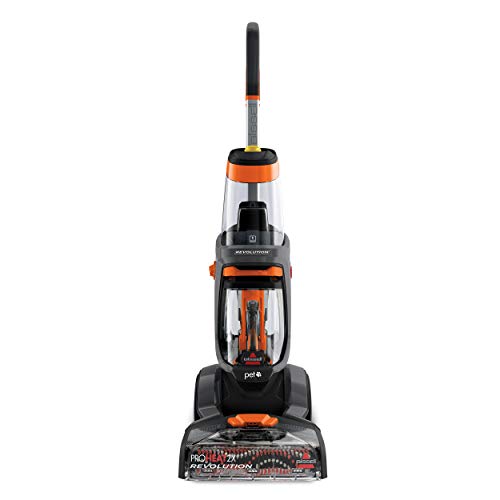
Bissell ProHeat 2X Revolution Pet Full Size Upright Carpet Cleaner, 1548F, Orange
$264.98 Check pricePrices change often


Common questions
Why do robot vacuums struggle with high pile carpet?
A robot's wheels can lose traction and bog down in long fiber, or its low ground clearance and smaller brush roll can ride over the top without real contact, depending on pile height. This is a structural limitation of the robot form factor, not a defect in one model, so a full-size upright is generally the better tool for high pile rooms.
Does suction power matter at all on high pile carpet?
Suction still matters for pulling loosened dirt up out of the pile, but agitation from a driven brush roll is what loosens embedded soil in the first place. Strong suction paired with a weak or non-driven brush head will still leave dirt near the backing on longer pile.
What does a self-adjusting cleaner head do?
It changes brush head height automatically between bare floor, low-pile rugs and thicker carpet, with no manual switch. This matters on high pile since a fixed-height head either rides on top of long fibers, missing agitation, or drags too low and can stall the roller.
Is a cordless vacuum good enough for a room of high pile carpet?
A cordless upright with a driven brush roll, like the Bissell PowerClean DualBrush here, can work well for one or two rooms, but battery runtime becomes a limiting factor in a larger area of thick carpet, since agitation-heavy cleaning drains a battery faster than light passes on bare floor.
How often should high pile carpet be vacuumed?
More often than low pile, since long fiber traps and hides more dirt near the backing between cleanings. A slower pass with overlapping rows a few times a week keeps embedded soil from building up, which matters more than any single spec on the machine used.
Can a carpet cleaner replace regular vacuuming on high pile carpet?
No, a carpet cleaner performs wet extraction for periodic deep cleaning and stain removal, a different job than the regular dry agitation and pickup a driven brush roll upright provides. Use both: an upright for routine cleaning and a carpet cleaner occasionally for deeper extraction.
Every figure here comes from published manufacturer specifications, owner reported measurements and repair documentation, and each is labelled as either a standard or a convention. This is researched general information to help you diagnose and plan, not professional advice, and it cannot tell you what is wrong with one particular machine. Your own manual and the part number printed on your machine are the final word.