Vacuum belts
Quick answer
The drive between the motor and the brush roll, and the cheapest part on the machine. It is also the most commonly skipped piece of vacuum maintenance there is. Roughly annually on a flat rubber belt in regular use, whether or not it looks worn. A stretched belt slips under load long before it breaks, so the lost cleaning arrives quietly. Current listings run from $5.93 to $14.99 across 17 options.
Prices and fitment claims come from the listings themselves. The service intervals are conventions rather than specifications.
Belts currently listed
An even spread across the price range rather than the cheapest options, so the grid reflects what is genuinely available.
- KEEPOW
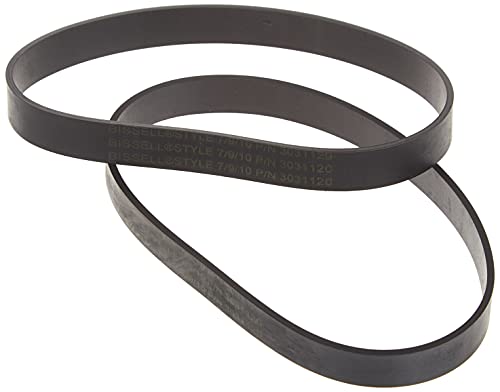
KEEPOW Style 7/9/10 P/N 3031120 Replacement Belt for Bissell Vacuum
$5.93 Check pricePrices change often - ATUOE
Vacuum Belts for Hoover High Performance Vacuum Cleaner UH75100, UH75110
$5.99 Check pricePrices change often - Hoover
Hoover WindTunnel Agitator Vacuum Belt, Pack of 2, Style 160
$6.28 Check pricePrices change often - MyKEEPOW
MyKEEPOW 3031120 Belts for Bissell Vacuum Style 7 9 10 12 14 16, 3 Pack
$7.99 Check pricePrices change often - KEEPOW
562932001 Vacuum Belt for Hoover Windtunnel Vacuum Cleaner
$8.99 Check pricePrices change often - KEEPOW
KEEPOW Style 7/9/10 P/N 3031120 Replacement Belt for Bissell Vacuum
$8.99 Check pricePrices change often - KEEPOW
KEEPOW 38528034/38528035 Vacuum Belt for Hoover WindTunnel
$12.99 Check pricePrices change often




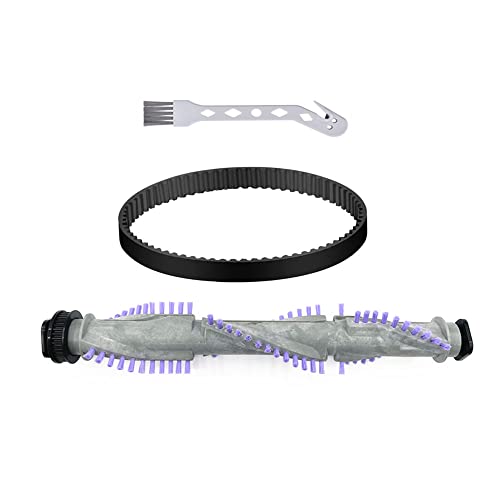
The fitment shown on this page is what each listing itself claims, not a compatibility check we have run. Read the number off your own part, or the model number on the plate on the machine body, and match that against the listing before ordering. This is the step that goes wrong most often and it costs nothing to get right.
By brand
Listings naming a specific brand, with the count of current options. Each of these goes to a page with the fitment notes and prices for that brand.
What this part does, and what a worn one costs you
The drive between the motor and the brush roll, and the cheapest part on the machine. It is also the most commonly skipped piece of vacuum maintenance there is.
Roughly annually on a flat rubber belt in regular use, whether or not it looks worn. A stretched belt slips under load long before it breaks, so the lost cleaning arrives quietly.
The other parts worth keeping ahead of
Filters, bags, belts, brush rolls, batteries and hoses are owner replaceable on almost every household machine, need nothing beyond a screwdriver, and between them account for the clear majority of vacuums thrown away while fundamentally sound.
Common questions
How do I know which belt fits my machine?
Take the old part out and read the number moulded or printed on it, then match that number against the listing rather than matching on brand. Makers run several ranges that look alike from the outside and take entirely different parts, so a brand match is not a model match. Where the old part has no number, the plate on the machine body carries the model number a listing is keyed to.
How often should a belt be replaced?
Roughly annually on a flat rubber belt in regular use, whether or not it looks worn. A stretched belt slips under load long before it breaks, so the lost cleaning arrives quietly. The interval is a starting point rather than a rule, because what actually drives it is how much passes through the machine. A home with shedding pets works through consumables roughly twice as fast as one without, and the guidance in your own manual should win over any general figure.
Are third party parts worth buying?
Sometimes, and the useful test is whether the listing states a specification. A part that names its dimensions, its media grade where relevant, and the specific models it fits is worth considering at any price. One that lists dozens of compatible models with no specification at all is asking you to trust a claim it has not made concrete.
Why does a worn part cost me so much performance?
Because most vacuum parts fail gradually rather than outright, so the performance loss arrives quietly and gets attributed to the machine as a whole. That is the mechanism by which working vacuums end up replaced: nothing broke, several cheap things wore, and the sum of them felt like a machine reaching the end of its life.
Can I clean this instead of replacing it?
It depends whether the problem is contamination or wear, and the two produce similar symptoms. Cleaning fixes contamination completely and does nothing at all for wear, so it is worth establishing which one you have before ordering. The diagnostics on this site work through that distinction for each part.
Every figure here comes from published manufacturer specifications, owner reported measurements and repair documentation, and each is labelled as either a standard or a convention. This is researched general information to help you diagnose and plan, not professional advice, and it cannot tell you what is wrong with one particular machine. Your own manual and the part number printed on your machine are the final word.