Replacing a vacuum belt
Quick answer
A flat rubber vacuum belt should generally be replaced about once a year in regular use, whether or not it looks worn, because rubber stretches with age and heat, and a stretched belt slips under load long before it actually breaks. Geared or cogged belts resist stretching and typically last far longer, often replaced only when they fail outright.
Belt material behavior and manufacturer service intervals, plus widely used repair-trade conventions.
The cheapest part on the machine, and the most skipped maintenance
A vacuum drive belt usually costs only a few dollars and takes a few minutes to change, yet it is one of the most commonly neglected maintenance items on the whole machine. Most owners only think about the belt after cleaning performance has already dropped noticeably or the belt has broken outright, by which point they have been cleaning less effectively for some time without realizing why.
The reason it gets skipped is that belt wear is quiet. Unlike a full bin or an obviously clogged filter, a stretched belt does not announce itself, and the machine keeps running and sounding normal even as it delivers less and less agitation to the carpet. Building a simple annual replacement habit for flat rubber belts avoids the slow, invisible performance loss that comes before an eventual snap.
Why a stretched belt fails quietly before it ever breaks
Flat rubber belts stretch gradually as they age, and heat generated during normal operation accelerates that stretching over time. A belt does not need to visibly crack or fray to have already lost significant tension. Once a belt stretches even a small amount, it starts to slip against the motor shaft or brush roll pulley under load, meaning the brush roll spins slower than it should, or hesitates, rather than turning at full speed.
This is why lost cleaning performance from a stretched belt arrives quietly rather than suddenly. The vacuum keeps running, keeps making noise, and keeps picking up some dirt, so nothing about the experience signals a problem the way a dead motor or a burst bag would. The belt is simply doing less work than it used to, and carpet cleaning quietly declines along with it until either the belt is replaced or it eventually breaks and the brush roll stops turning entirely.
Belts and brush rolls for the models that use them
- KEEPOW
KEEPOW Style 7/9/10 P/N 3031120 Replacement Belt for Bissell Vacuum
$5.93 Check pricePrices change often - KEEPOW
562932001 Vacuum Belt for Hoover Windtunnel Vacuum Cleaner
$8.99 Check pricePrices change often - JoyBros
Replacement Parts for iRobot Roomba 600 Series Vacuum Cleaners
$17.99 Check pricePrices change often - Shark
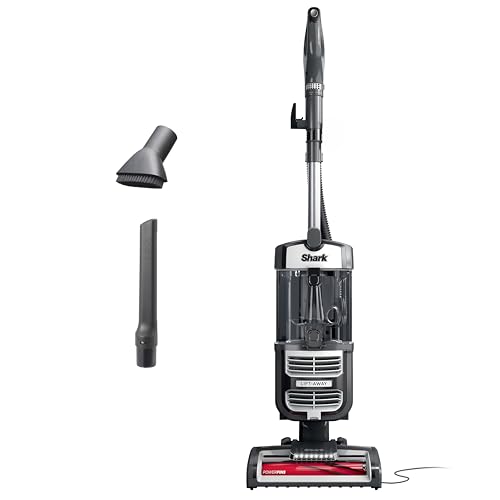
Shark Navigator Lift-Away Vacuum, HEPA, Carpet and Pet Hair, Blue, NV360
$189.95 Check pricePrices change often




Flat rubber belts versus geared or cogged belts
Most household vacuums use one of two belt styles, and they age very differently. Flat rubber belts are smooth loops of rubber that rely on friction and tension alone to transfer motor power to the brush roll; because they depend on tension, stretching directly reduces their grip, which is why an annual replacement schedule regardless of appearance is the more reliable approach. Geared or cogged belts have interlocking teeth that mesh with matching teeth on the pulleys, transferring power mechanically rather than through friction alone, which makes them far more resistant to stretching over time.
Because geared belts resist the gradual, invisible failure mode of flat belts, they are generally only replaced when they actually fail, whether that is a tooth stripping, a crack forming, or an outright break, rather than on a fixed calendar schedule. Check your specific model's manual or look at the belt itself to know which style is fitted before deciding which replacement approach applies.
- Flat rubber belt: replace roughly annually regardless of appearance
- Geared or cogged belt: replace on visible damage or failure, not on a fixed schedule
- Robot vacuums and most cordless sticks: no drive belt fitted at all
A simple hand test to check belt condition
With the vacuum switched off and unplugged, or the battery removed on a cordless model, turn the brush roll by hand. A healthy belt with proper tension will resist your hand and turn the motor pulley along with it, since the belt is transferring that mechanical resistance back through the drive system. A stretched belt that has lost its grip will spin freely with little to no resistance, turning the brush roll without meaningfully engaging the motor pulley at all.
This test takes only a few seconds and does not require removing the belt or opening the machine beyond accessing the brush roll housing, making it a reasonable thing to check periodically even outside of a fixed replacement schedule, especially if you have noticed carpet cleaning seems to be declining.
The burning smell that means stop using the vacuum now
A burning rubber smell coming from a vacuum during use is almost always the belt itself grinding against a brush roll that has stalled, usually because hair, thread or string has wound tightly around one of the roll's end caps and physically jammed it from turning. When this happens, the belt continues to be driven by the motor but cannot turn the seized roll, so it slips and generates friction heat and the characteristic burning smell as it grinds against the stationary roll.
If you smell burning rubber, stop using the vacuum immediately rather than continuing to run it while you investigate. Clear the hair or debris jamming the brush roll end caps completely before doing anything else. A belt that has been cooked by grinding against a jammed roll has been damaged by that heat and should be replaced rather than reused, even if it looks intact afterward, since a heat-damaged belt will not recover its original strength or tension.
Machines that do not have a belt at all
Not every vacuum has a drive belt to worry about. Robot vacuums almost universally drive their brush rolls directly with a small motor geared straight to the roll, with no belt in the drive path at all, since the compact design does not have room for a belt system and direct drive is more reliable in a low-maintenance appliance meant to run unattended. Most cordless stick vacuums have also moved to direct-drive brush rolls for the same reasons of compactness and reduced maintenance, though this varies by model and is worth checking in your specific machine's manual rather than assuming.
Upright and canister vacuums are the models most likely to still use a belt-driven brush roll, which is why belt wear and replacement is a maintenance topic mainly relevant to those two categories rather than robots or most cordless sticks.
| Belt type | Common on | Typical replacement trigger |
|---|---|---|
| Flat rubber | Uprights, some canisters | Roughly annually, regardless of appearance |
| Geared / cogged | Uprights, some canisters | On visible damage or outright failure |
| No belt (direct drive) | Robot vacuums, most cordless sticks | Not applicable |
If you cannot remember the last time you changed the belt on an upright or canister, treat that as your answer: check it with the hand test above, and if it has been longer than a year of regular use, replace it as routine maintenance rather than waiting for a failure.
Safety
Unplug the vacuum at the wall, or remove the battery on a cordless model, before reaching into a brush roll housing to check or clear a jam. A thermal cutout that has tripped from an overheating motor resets automatically once the motor cools, meaning the brush motor can restart on its own without warning if the machine is still connected to power.
Common questions
How do I know if my vacuum belt is flat rubber or geared?
Remove the brush roll cover and look at the belt directly: a flat belt is a smooth, featureless loop, while a geared or cogged belt has visible ridges or teeth running along its inner surface that mesh with matching teeth on the pulleys. Your model's manual will also usually specify which type is fitted and the correct replacement part number.
My belt looks fine, does it still need replacing every year?
For flat rubber belts, yes. Stretching happens gradually inside the rubber structure and is not something you can reliably judge by looking at the belt, since a stretched belt can still look intact while having lost most of its grip. Geared belts are the exception and are generally fine to leave in place until they show visible damage or fail.
What does it mean if the brush roll spins freely when I turn it by hand?
A brush roll that spins freely with little resistance when turned by hand, with the machine off, usually indicates the belt has stretched enough to lose its grip on the motor pulley. A healthy belt transfers noticeable resistance back to your hand as you turn the roll. This is a reliable sign it is time to replace the belt.
I smell burning rubber. Is it safe to keep vacuuming and check it later?
No, stop immediately. A burning rubber smell almost always means the belt is grinding against a brush roll jammed by wound hair or thread, generating heat that can damage the belt permanently and, left unaddressed, can affect the motor or housing as well. Switch off, unplug or remove the battery, and clear the jam before using the machine again.
Does my robot vacuum have a belt I need to replace?
Almost certainly not. Robot vacuums drive their brush rolls directly with a small motor geared straight to the roll, with no belt in the design at all, so belt wear is not something to check on a robot vacuum. If a robot's brush roll stops turning, the cause is a different mechanical or motor issue.
Can I use a slightly wrong size belt if that is what I have on hand?
No. A belt sized incorrectly for the machine will either sit too loose to grip properly, reproducing the same slipping problem as a stretched belt, or sit too tight and place excess strain on the motor bearing. Always match the belt to the exact model or the part number specified in the manual.
Every figure here comes from published manufacturer specifications, owner reported measurements and repair documentation, and each is labelled as either a standard or a convention. This is researched general information to help you diagnose and plan, not professional advice, and it cannot tell you what is wrong with one particular machine. Your own manual and the part number printed on your machine are the final word.