Best cordless stick vacuums
Quick answer
The Tineco Pure ONE S70 ($399.00) is the strongest all-around pick, with a published 200 air watts and a 95 minute runtime figure that beats most models costing more. Budget shoppers should look at the Tikom V500 ($89.99) for a genuinely cordless option with a HEPA filter claim, while anyone chasing the highest published air watts figure in the catalog should look at the Dyson V15 Detect Plus ($809.99) at 240 air watts.
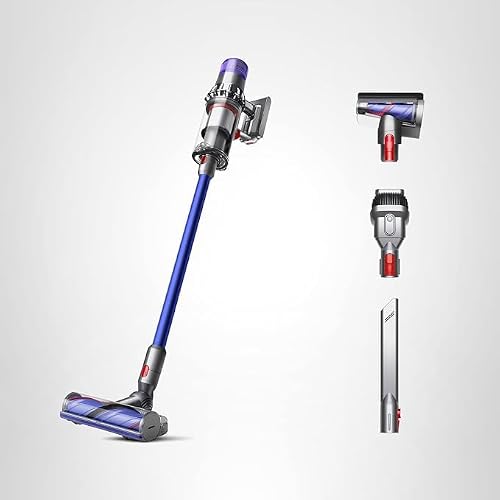
Dyson V11 Origin Cordless Vacuum, 185AW, 3 Power Modes, Up to 60 Minutes,² Deep Cleans Hard Floors and Carpets, Detangles pet Hair, Converts to Handheld
The Dyson V11 Origin lists 185 air watts and up to 60 minutes of runtime with three power modes, which puts it close to flagship performance for meaningfully less than the top-tier Dyson models. At $449.99 it sits well above entry price without reaching the $800-plus territory of the newest Dyson detect models.
The three tiers
Beginner: Tikom V500
A first cordless vacuum for quick daily pickups on hard floor and light carpet in a small to mid-size home.
The Tikom V500 lists 40,000Pa suction, a 1.3 litre bin, a HEPA filter claim, and a 2000mAh battery with an LED touch screen showing remaining charge. That combination of a sealed filter and a visible battery readout is unusual at this price point, where many rivals give neither. At $89.99 it is one of the least expensive genuinely cordless stick vacuums in the catalog.
Not for: Larger homes or anyone who needs 60-plus minutes of continuous runtime, since the published spec sheet does not list a runtime figure and the small battery size suggests shorter sessions between charges.
Intermediate: Tineco Pure ONE S70
A household that wants near-flagship suction and a long runtime without paying flagship price.
Tineco publishes 200 air watts of suction and up to 95 minutes of runtime for the Pure ONE S70, both of which are strong figures relative to price. It also lists a HEPA filter and a zero-tangle brush design aimed at pet hair, plus a foldable tube for storage. At $399.00 it undercuts most Dyson models with comparable air watts figures.
Not for: Anyone who specifically wants the Dyson ecosystem of accessories and attachments, since Tineco tooling is not interchangeable with Dyson parts.
Expert: Dyson V15 Detect Plus
Buyers who want the highest published air watts figure among cordless sticks in the catalog and value the illuminated dust-reveal feature.
The V15 Detect Plus lists 240 air watts, the highest figure among cordless stick vacuums in this roundup, across three power modes and up to 60 minutes of runtime. It also includes the laser illumination feature that lights up fine dust on hard floors, and it converts to a handheld for stairs and upholstery. At $809.99 it is priced very near the top of the category.
Not for: Anyone who runs mostly on medium to high-pile carpet for extended sessions, where 60 minutes of total runtime at full power drops quickly and a corded upright may cover more square footage per session.
| Model | Price | Suction | Runtime | Filter |
|---|---|---|---|---|
| Tikom V500 | $89.99 | 40,000Pa | Not published | HEPA |
| Tineco Pure ONE S70 | $399.00 | 200 air watts | 95 min | HEPA |
| Dyson V11 Origin | $449.99 | 185 air watts | 60 min | Not published |
| Dyson V15 Detect Plus | $809.99 | 240 air watts | 60 min | Not published |
Air watts versus Pascals: two different measurements
Cordless stick vacuum listings mix two different suction measurements depending on the brand. Dyson and some others publish air watts (AW), which measures actual work performed at the cleaning head. Budget brands often publish Pascals (Pa), which measures sealed suction with the inlet blocked. There is no valid conversion between the two figures, so a 40,000Pa budget stick cannot be directly compared to a 200 air watt Tineco or a 240 air watt Dyson. Compare Pa to Pa and air watts to air watts only.
Within the air watts figures in this roundup, the range runs from 185AW on the Dyson V11 Origin up to 240AW on the V15 Detect Plus, both from the same brand using the same measurement method, which is a fair comparison.
The runtime figure on the box is the fastest mode, not the longest
Every runtime figure published for a cordless stick vacuum, including the ones in the table above, is measured on the lowest power setting the vacuum offers, sometimes called eco mode. On the highest, most powerful setting, that same vacuum will typically run for roughly a quarter to a third as long. A vacuum rated for 60 minutes on the box may realistically deliver 15 to 20 minutes of full-power cleaning before needing a recharge.
This matters most for larger homes or households with pets, where full power is needed more often. Check whether a listing states its runtime figure at maximum or eco mode before assuming it will cover an entire home in one charge at full strength.
What a driven brush roll does that suction alone cannot
Carpet is cleaned mostly by agitation, meaning a motorized brush roll physically dislodging embedded dirt, not by suction pulling it out. A cordless stick with a strong air watts figure but a passive, non-motorized head will still underperform on carpet compared to a lower-powered model with a properly driven brush roll. Every model in this roundup lists a motorized head, but the brush roll design (anti-tangle, zero-tangle, or standard) affects how well it handles pet hair specifically.
On hard floor, the opposite concern applies: a stiff bristle brush roll built for carpet agitation can mark a sealed wood or vinyl finish. Several models above, including the Tineco Pure ONE S70, market a soft-roller or zero-tangle head specifically to avoid that on hard floors.
When a cordless stick is the wrong tool for the job
Cordless sticks trade runtime and bin size for portability. A home larger than roughly 1,500 to 2,000 square feet, or one with deep wall-to-wall carpet throughout, will often need a battery swap or a recharge mid-clean, or simply move less total floor area per session than a corded upright or canister. Households doing a single deep clean of a large area in one sitting may get more out of the upright or canister roundups linked below.
How we chose
We have not tested any of these vacuums in person. Every air watts, Pascal, runtime and battery figure above comes directly from the manufacturer specifications published on the Amazon listing for that exact ASIN.
Where a listing published air watts, we treated that as more directly comparable across models than Pascals, and we never converted one figure into the other.
We chose one model from the bottom of the price range, one from the middle, and one at or very near the top, rather than picking three models bunched in the same price band.
Runtime and brush roll claims referenced in the buying tips reflect what the manufacturer states on the listing, not our own timed use of the product.
Buying tips
Check whether the runtime figure is eco mode or max mode
A vacuum advertised at 95 minutes is almost certainly measured on its lowest power setting. Expect roughly a quarter to a third of that time on full power, and plan cleaning sessions accordingly for larger homes.
Match the brush roll to your dominant floor type
A soft or anti-tangle roller head suits hard floors and pet hair better; a stiffer, driven brush roll suits carpet agitation. If a home is a genuine mix, look for a listing that explicitly markets a dual-purpose or auto-adjusting head.
Do not compare Pa and air watts figures across brands
There is no valid formula to convert between the two units. If one listing states Pascals and another states air watts, treat them as measuring different things rather than trying to rank them on the same scale.
Factor in battery replacement cost over the life of the vacuum
Every cordless stick vacuum runs on a rechargeable battery that degrades over time, typically losing meaningful capacity after two to four years of regular use depending on charge cycles. Check the battery-fade tool linked below before assuming a vacuum with a strong runtime figure today will hold that runtime for its full lifespan.
Other options across the price range
An even spread from the bottom to the top of the category, not the six cheapest.
- RONEAIR
RONEAIR Cordless Vacuum Cleaner 40Kpa 45Min 6-in-1 Self-Standing
$65.99 Check pricePrices change often - Shark
Shark Rocket Pro DLX Corded Stick Vacuum, XL Cup, Handheld, Fuchsia, HV371
$139.98 Check pricePrices change often - Levoit
Levoit Cordless Vacuum, Up to 70 Minutes, Lightweight, Charging Dock
$219.99 Check pricePrices change often


Safety
If a cordless stick vacuum battery becomes swollen, unusually hot, or visibly damaged, stop using it immediately. Do not attempt a repair; take it to a battery recycling point rather than household trash.
Standard cordless stick vacuums are not built to pick up standing water, fireplace ash, or drywall dust. Any of these can damage the motor or filter and, in the case of hot ash, create a fire risk inside the bin.
Common questions
Can I compare a Pascal figure and an air watts figure to decide which cordless stick is stronger?
No. Pascals measure sealed suction pressure with the inlet blocked, while air watts measure actual work done at the cleaning head, and there is no valid formula to convert one into the other. Compare Pa to Pa or air watts to air watts only, and treat a listing that only gives one figure as not directly comparable to a listing that only gives the other.
Why does my cordless stick vacuum run out of battery faster than the box promised?
The runtime figure printed on packaging is almost always measured on the lowest, or eco, power mode. Running on the highest suction setting, which is often needed for carpet or pet hair, typically drains the battery three to four times faster, so a 60 minute rated vacuum may deliver closer to 15 to 20 minutes at full power.
Will a cordless stick vacuum clean carpet as well as an upright?
It depends more on the brush roll than the suction figure. Carpet is cleaned mainly through agitation from a driven brush roll, so a cordless stick with a properly motorized head can perform comparably to an upright on low to medium pile carpet, though larger uprights generally hold more debris and cover more floor per session.
Is a stiff bristle brush roll bad for hardwood floors?
It can be. A stiff bristle roll designed for carpet agitation can mark or scratch a sealed hardwood or vinyl finish over repeated use. Look for a soft roller or a listing that specifically markets a hard-floor or dual-surface head if most of the home is hard flooring.
How long does a cordless stick vacuum battery actually last before it needs replacing?
Most lithium batteries in cordless stick vacuums lose noticeable capacity after roughly two to four years of regular charge cycles, though this varies by usage and how often the battery is fully drained before recharging. A swollen, hot or visibly damaged battery should never be repaired at home; take it to a battery recycling point instead of household trash.
Do I need a HEPA filter on a cordless stick vacuum?
A HEPA filter matters most for households with allergies or asthma, since it captures smaller particles than a standard filter before they recirculate into the room. Several models in this roundup list HEPA filtration; if allergy control is a priority, prioritize a listing that explicitly states HEPA over one that only claims general filtration.
Every figure here comes from published manufacturer specifications, owner reported measurements and repair documentation, and each is labelled as either a standard or a convention. This is researched general information to help you diagnose and plan, not professional advice, and it cannot tell you what is wrong with one particular machine. Your own manual and the part number printed on your machine are the final word.