Upright: a change in noise
Quick answer
When a upright has a change in noise, check partial blockage first: A high pitched whine usually means the motor is pulling against a restriction. There are 3 checks worth running on this machine type and together they take about 35 minutes. The first one that needs a part is partial blockage, and that part is a hose.
A widely used service rule of thumb rather than a specification. Treat it as a starting point and let your own manual win.
| Check | How you test it | What fixes it | Time |
|---|---|---|---|
| Partial blockage | A high pitched whine usually means the motor is pulling against a restriction. | Work through the airway from head to bin. | 15 min |
| Object rattling in the fan chamber | A rattle that changes with orientation. | Stop immediately. Something hard reaching the fan will destroy it. | 20 min |
| Failing motor bearings | A growl that is present from the moment it starts, with no blockage found. | This is the point where repair cost is usually worth checking against replacement. | 0 min |
The parts these checks point to
Shown across the price range rather than cheapest first, so the grid reflects the whole category.
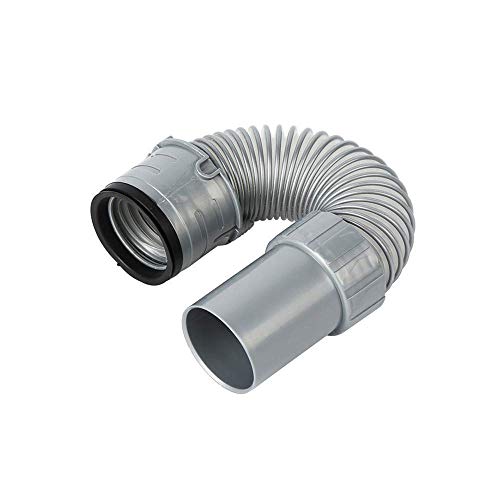
- Methuker
14-37-0105 Vacuum Hose Replacement for Milwau-kee Packout Vacuum
$12.99 Check pricePrices change often - VACEXT
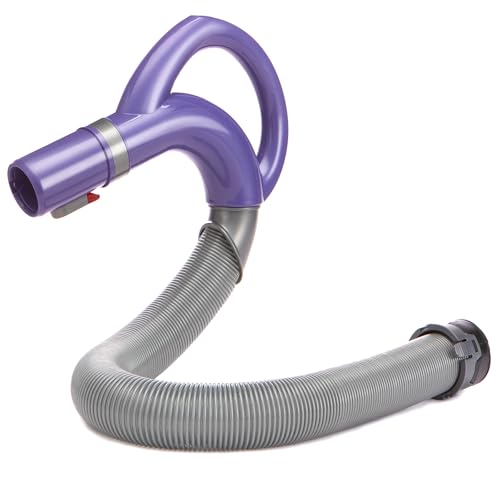
Replacement Vacuum Attachments, Brushes & Universal Hose Adapter Kit
$19.95 Check pricePrices change often




Why this order and not another
The list above is sorted by how likely a cause is multiplied by how cheap it is to rule out, which is the order a service counter works in rather than the order an owner usually guesses in. Partial blockage sits first because it costs nothing to check and it accounts for a large share of machines brought in with this complaint.
Order matters for a second reason on a upright: a restriction upstream makes every test downstream of it misleading. A machine that cannot pass air at the filter has poor airflow everywhere, so inspecting the floor head before clearing the filter tells you very little about the floor head.
What is different about a upright
A motorised brush roll driven across carpet by a full size motor on mains power. Carpet. An upright agitates a pile harder and for longer than any battery machine.
Every check in the general list applies here, because this type has the full mechanical set: a driven brush roll, a belt, a hose and a collection stage. Weight, stairs, and getting under low furniture.
When to stop checking and start pricing
If you work through all 3 checks and the symptom is unchanged, the remaining causes are the ones that need a quote: motor bearings, a cracked body letting air in, or a hardened seal. A upright is expected to last 6 to 10 years, and where the machine already sits in that range is what decides whether a quote is worth getting.
That is a different question from this page, and the repair or replace tool answers it with real numbers rather than a feeling. Bring a quote and the price of the machine you would actually buy instead.
Common questions
What is the most common cause of a change in noise on a upright?
Across service counters it is partial blockage, which is why it heads the list. A high pitched whine usually means the motor is pulling against a restriction. That single check costs nothing, takes about 15 minutes, and resolves a large share of machines brought in with this complaint before anything is taken apart or ordered.
How long should all of this take?
About 35 minutes if you work straight through every check, and far less in practice because most people find the cause in the first two or three steps. The order is designed so the quick and free checks come before anything that needs a screwdriver, a part, or a trip to a shop.
Does a upright need anything special before I start?
Power isolation, and it is not optional. Unplug a corded machine at the wall, or physically remove the battery from a cordless one, before your hand goes near a brush housing. Brush motors have a thermal cutout that resets on its own once the motor cools, and a switched-on machine can restart without any warning at all.
What if I find more than one thing wrong?
That is common and it is usually one cause producing several symptoms rather than several independent faults. A blocked filter, for instance, makes the motor run hot, shortens battery runtime and reduces pickup all at once. Fix what you find in the order above and re-test between each step rather than replacing everything at once.
Will this tell me what is wrong with my machine?
No, and it does not try to. It gives you the order to check things in and what each result would mean, because nothing on this site can see your vacuum. Every entry here is a general checking procedure drawn from how these machines are built, and the manual for your own model is the final authority on it.
Every figure here comes from published manufacturer specifications, owner reported measurements and repair documentation, and each is labelled as either a standard or a convention. This is researched general information to help you diagnose and plan, not professional advice, and it cannot tell you what is wrong with one particular machine. Your own manual and the part number printed on your machine are the final word.