A filter against a new upright
Quick answer
A filter runs around $15.29 against a median upright at $182.49, so the repair is about 8.4 percent of a replacement. The usual service rule is that a repair is worth doing when it costs less than half the price of the replacement you would otherwise buy, and the machine has more than a third of its expected life left. On those numbers this repair clears the bar comfortably, provided the rest of the machine is sound.
Prices are current catalog medians. The half price rule and the expected life ranges are service conventions.
| Figure | Value |
|---|---|
| Median price for this part | $15.29 |
| Median upright price | $182.49 |
| Repair as a share of replacement | 8.4% |
| Half price rule threshold | $91.25 |
| Expected life of a upright | 6 to 10 years |
| A replacement costs per year | $22.81 across its expected life |
| Repair | Who does it |
|---|---|
| Filter | Owner, no special tools |
| Bag | Owner, no special tools |
| Belt | Owner, no special tools |
| Brush roll | Owner, no special tools |
| Battery | Owner, no special tools |
| Hose | Owner, no special tools |
| Mop pad | Owner, no special tools |
| Motor bearings | Shop, and usually worth pricing against replacement |
| A cracked chassis | Shop, and usually worth pricing against replacement |
| A failed main board | Shop, and usually worth pricing against replacement |
| Water damage | Shop, and usually worth pricing against replacement |
The part, and the machine if it comes to that
Shown across the price range rather than cheapest first, so the grid reflects the whole category.
- KEEPOW
KEEPOW Vacuum Filters Compatible with Bissell Febreze Style 1214
$7.99 Check pricePrices change often - Colorfullife
Vacuum Filter Replacement for Shark Navigator Lift Away NV350 NV352 NV360
$19.99 Check pricePrices change often - Shark
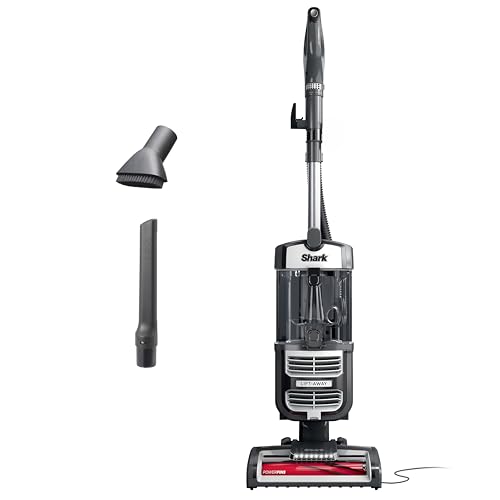
Shark Navigator Lift-Away Vacuum, HEPA, Carpet and Pet Hair, Blue, NV360
$189.95 Check pricePrices change often




Where the half price rule comes from
The usual service rule is that a repair is worth doing when it costs less than half the price of the replacement you would otherwise buy, and the machine has more than a third of its expected life left. It holds up because a repair buys the remaining life of an old machine while a replacement buys a whole one, so once a repair passes half the replacement price the cost per remaining year almost always exceeds what a new machine would cost per year.
At 8.4 percent of a replacement, a filter is nowhere near that line. The question on a part this cheap is not whether the arithmetic works, it is whether this part is genuinely the problem, which is what the diagnostics on this site are for.
What a filter does not fix
Several causes produce the same complaint, so a part that is cheap enough to try on a hunch is also cheap enough to waste. Motor bearings, A cracked chassis, A failed main board, Water damage all read as a machine that has stopped working properly, and none of them is improved by a filter.
Work through the checking order first. It costs nothing and it is the difference between a repair and a guess.
The parts availability question
Repairability is decided by whether parts still exist, not by how well the machine was built. A upright whose maker still sells filters, belts, brush rolls and hoses is serviceable for a decade; one whose parts have been discontinued is not repairable at any price. Check that before paying anyone for a diagnosis.
This is also the strongest argument for buying a machine from a maker with a long parts history. A upright is expected to last 6 to 10 years, and that figure assumes the consumables were available throughout.
Common questions
Is it worth putting a filter in a upright?
On price, comfortably. At around $15.29 against a median machine price of $182.49, the repair is about 8.4 percent of a replacement, well inside the usual half price threshold. The real question is whether this part is the cause, because a cheap part is also cheap to waste on the wrong diagnosis.
What does the half price rule actually say?
The usual service rule is that a repair is worth doing when it costs less than half the price of the replacement you would otherwise buy, and the machine has more than a third of its expected life left. It is the line the appliance repair trade has used across categories for decades, and it works because a repair only buys the machine's remaining life. Past that threshold, the cost per remaining year usually exceeds what a new machine would cost per year across its whole life.
Can I fit this part myself?
Yes. Filters, bags, belts, brush rolls, batteries and hoses are all designed to be changed by the owner and need nothing beyond a screwdriver. Between them they account for the clear majority of household vacuums that are thrown away while fundamentally sound, which is the whole reason this site exists.
How long should a upright last?
6 to 10 years is the usual range, which works out at roughly $22.81 a year at current median prices. Where a machine sits in that range is what decides whether a larger repair is worth it: the same quote points one way on a two year old machine and the other way on one near the top of its range.
What if I am not sure which part has failed?
Then do not order anything yet. The suction loss triage tool works through the causes in the order a service counter checks them, cheapest and most likely first, and most people find the answer within the first two or three steps without spending anything. Ordering on a guess is how a cheap repair turns into three cheap repairs.
Every figure here comes from published manufacturer specifications, owner reported measurements and repair documentation, and each is labelled as either a standard or a convention. This is researched general information to help you diagnose and plan, not professional advice, and it cannot tell you what is wrong with one particular machine. Your own manual and the part number printed on your machine are the final word.