Carpet cleaner on sealed hardwood
Quick answer
A carpet cleaner is not the natural choice for sealed hardwood. That floor needs suction without aggressive agitation, and a soft roller or brush off mode. which is not what this machine type optimises for, and owners of this floor more often end up with cordless stick or a canister or a robot vacuum.
A widely used service rule of thumb rather than a specification. Treat it as a starting point and let your own manual win.
| Machine type | Suited | What it does here | Expected life |
|---|---|---|---|
| Robot vacuum | Yes | Daily maintenance cleaning on hard floors and low pile carpet, with no effort from you. | 3 to 6 years |
| Cordless stick | Yes | Quick jobs, stairs, cars, and hard floors. Convenience is the whole product. | 4 to 7 years |
| Upright | Not the first choice | Weight, stairs, and getting under low furniture. | 6 to 10 years |
| Canister | Yes | Hard floors, stairs, upholstery, and filtration, especially in bagged form. | 8 to 15 years |
| Wet dry floor washer | Not the first choice | Carpet, cost, and the fact that it needs rinsing after every single use. | 3 to 6 years |
| Carpet cleaner | Not the first choice | It is not a vacuum. You still vacuum first, every time. | 5 to 10 years |
| Handheld | Not the first choice | Tiny bin, short runtime, and no real carpet capability. | 3 to 6 years |
Machines for sealed hardwood
Shown across the price range rather than cheapest first, so the grid reflects the whole category.
- RONEAIR
RONEAIR Cordless Vacuum Cleaner 40Kpa 45Min 6-in-1 Self-Standing
$65.99 Check pricePrices change often


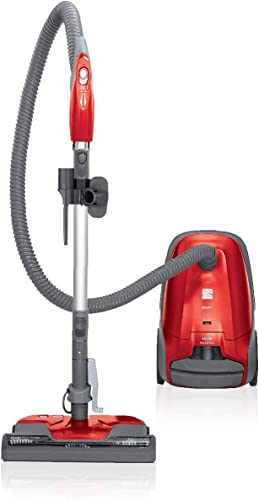


What sealed hardwood actually needs
Suction without aggressive agitation, and a soft roller or brush off mode. The thing to avoid on this floor is a stiff bristle brush roll on a running setting, which marks a soft finish over time.
Grit is what scratches a floor, so frequency matters more than power here.
How a carpet cleaner behaves on it
A deep cleaner that injects detergent solution into carpet and extracts it again. On this floor specifically, the mismatch shows up as it is not a vacuum. You still vacuum first, every time.
That does not make it useless here. Plenty of homes run one happily on this floor and accept the compromise, particularly where the rest of the house is a different surface. It does mean that if this floor is most of your home, the machine will feel like it is working against the room.
Where people get this wrong
The most common mistake is buying on a suction figure rather than on the head. Carpet is cleaned mostly by agitation, so a driven brush roll and slow overlapping passes matter more than any pascal or air watt number. Hard floors are the reverse: agitation risks marking the finish and what you want is airflow and a soft roller.
The second mistake is head height. A head set too low on carpet seals against the pile and stops airflow entirely, which feels exactly like a broken machine. If a vacuum suddenly stops picking up on one particular floor, the height setting is worth checking before anything is taken apart.
Common questions
Can I use a carpet cleaner on sealed hardwood?
You can, but it is working against its design. Suction without aggressive agitation, and a soft roller or brush off mode. It is not a vacuum. You still vacuum first, every time. If this floor is most of your home, the table above shows what owners of this surface more often settle on, and the difference is usually obvious within a week.
What should I avoid on sealed hardwood?
A stiff bristle brush roll on a running setting, which marks a soft finish over time. That is the failure that is hard to undo, as opposed to a machine simply underperforming. The rest is a matter of degree: a less suitable vacuum leaves the floor less clean, while the wrong technique on this surface can leave marks or damage that no amount of cleaning afterwards fixes.
Does suction matter more or less on this floor?
Less than people expect, on any floor. Sealed suction figures are measured with the inlet blocked, which is not a condition you ever clean in. What decides the result is airflow through an unblocked path, the head design, and on carpet the agitation from a driven brush roll. Compare like against like within a machine type and treat headline figures as marketing.
Do I need a different machine for each floor in the house?
Usually not, and most homes are better served by one capable machine with an adjustable head than by two specialised ones. The exception is a home split roughly evenly between deep pile carpet and sealed hard floor, where the requirements genuinely conflict, and a second machine or a separate floor washer starts to earn its place.
How often should this floor be vacuumed?
Grit is what wears a floor, so frequency matters more than power on hard surfaces, where a light pass every few days does more good than a thorough one every fortnight. On carpet the reverse holds: the dirt sits down in the pile and only comes out with slow, overlapping passes, so fewer but more careful sessions beat frequent quick ones.
Every figure here comes from published manufacturer specifications, owner reported measurements and repair documentation, and each is labelled as either a standard or a convention. This is researched general information to help you diagnose and plan, not professional advice, and it cannot tell you what is wrong with one particular machine. Your own manual and the part number printed on your machine are the final word.