Roborock against Roomba
Quick answer
The Roborock Qrevo CurvX ($799.99) lists 22,000Pa suction and lidar navigation but no self-emptying base. The iRobot Roomba Max 715 ($599.99) lists a higher 30,000Pa suction figure, lidar navigation, and a self-emptying base, at a lower price. On these two published spec sheets, the Roomba Max 715 covers more ground for less money, though Roborock's wider app ecosystem and mopping hardware in other models is a separate consideration this pairing doesn't capture.
Published manufacturer specifications, plus general robot vacuum servicing conventions where noted.

iRobot Roomba Max 715 Pet Robot Vacuum, 30,000Pa Suction, Dual Rubber Anti-Tangle Brushes & Side Brush, 90 Days Self-Emptying, PrecisionVision AI Obstacle Avoidance, 3D Mapping, Advanced Dirt Detect
On published specifications alone, the Roomba Max 715 offers a higher suction figure and a self-emptying base for $200 less than the Roborock Qrevo CurvX, which does not self-empty. A buyer who specifically wants Roborock's app and multi-floor mapping ecosystem may still prefer the Qrevo line, but that preference sits outside what either spec sheet states.
The two sides
- Roborock
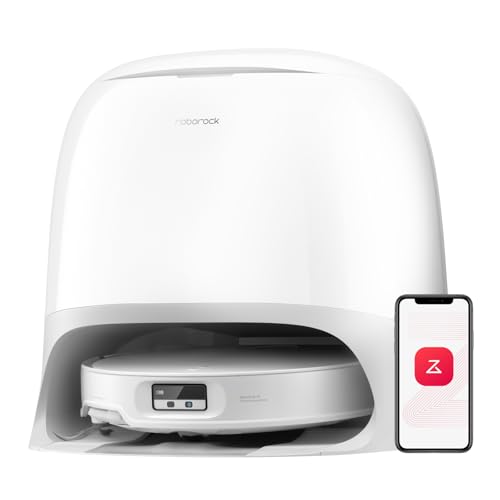
roborock Qrevo CurvX Robot Vacuum and Mop, 22,000Pa Suction
The Qrevo CurvX lists 22,000Pa suction and lidar mapping in Roborock's current lineup.
$799.99 Check pricePrices change often - Roomba
The Roomba Max 715 lists 30,000Pa suction, lidar navigation and a self-emptying base at a lower price than the Qrevo CurvX.
$599.99 Check pricePrices change often
| Factor | Roborock Qrevo CurvX | Roomba Max 715 |
|---|---|---|
| Price | $799.99 | $599.99 |
| Suction (published) | 22,000 Pa | 30,000 Pa |
| Navigation | Lidar | Lidar |
| Self-emptying base | Not included | Included |
| Bagless bin | Yes | Yes |
| Typical service life | 3 to 6 years | 3 to 6 years |
Comparing pascals, not marketing tiers
Both of these machines publish a pascal rating, which measures sealed suction pressure with the inlet blocked. That is a valid apples-to-apples comparison since both brands are reporting the same unit under the same test condition. On that basis, the Roomba Max 715's 30,000Pa figure is the higher published number, ahead of the Qrevo CurvX's 22,000Pa. Pascal ratings describe peak sealed pressure, not necessarily how a robot performs at the edge of a rug or against a thick pile carpet, where brush design and wheel traction matter as much as the number on the box.
Self-emptying base: the bigger practical difference here
The Roomba Max 715 includes a self-emptying base, which the Qrevo CurvX in this pairing does not. A self-empty base holds roughly 2.0 to 3.5 litres of debris and runs about 4 to 8 weeks between bag changes, moving the emptying chore from every run to about once a month. That convenience costs ongoing bag money and roughly 20 seconds of real noise per empty cycle, along with the counter or floor space the base itself occupies.
Buyers who want a Roborock machine with a self-empty base exist, they simply sit in a different model within Roborock's lineup than the Qrevo CurvX chosen here, since this comparison is built around two real, currently listed machines rather than a hypothetical spec sheet.
What lidar buys both of these robots
Both machines use a spinning lidar turret rather than a camera-based system, which means both can map a home in complete darkness and build a dimensioned floor plan that supports no-go zones and room-by-room cleaning. The tradeoff for either brand's lidar hardware is a slightly taller chassis than a camera-only design, which can matter under very low furniture or bed frames.
Bagless bins on both machines, and what that means day to day
Both the Qrevo CurvX and the Roomba Max 715 use a bagless collection method, though the Roomba routes its debris into a self-empty base rather than a bin you handle directly. That means the Roomba owner rarely opens anything by hand, while the Qrevo CurvX owner will periodically remove and empty an onboard bin, similar to emptying a bagless upright or canister. Neither approach carries the recurring bag cost that a fully bagged system would, though the Roomba's self-empty base does still use disposable bags at the base itself rather than in the robot.
A question people actually ask: does a higher pascal number always mean a stronger clean?
Not by itself. Pascal figures measure suction at a sealed inlet, but real cleaning performance also depends on brush roll design, how well the machine's skirt seals against the floor, and how full the bin or bag is at the time of the run. A robot rated at 22,000Pa with a well-designed brush and clean bin can outperform a 30,000Pa unit running on a clogged filter or worn brush.
- Compare pascal figures only against other pascal figures, never against air watt numbers from a different product category.
- A self-emptying base reduces manual dumping but adds a recurring bag cost that a manual-empty robot avoids entirely.
- Lidar navigation on either brand supports no-go zones and multi-floor maps that camera-only navigation typically cannot match as reliably in the dark.
Choose the Roomba Max 715 if the self-emptying base and the higher published suction figure at a lower price matter more than brand ecosystem. Choose the Roborock Qrevo CurvX if you specifically want Roborock's app, mapping software or the broader Roborock accessory line, and are comfortable manually emptying the bin. There is no universal winner between the two brands as a whole; this comparison reflects two specific, currently sold models.
Others in this category
An even spread across the price range.
- ROPVACNIC
ROPVACNIC Robot Vacuum and Mop Combo 5200Pa Suction Robotic Cleaner
$99.99 Check pricePrices change often - roborock
roborock Q7 L5 Robot Vacuum and Mop Combo, 8,000Pa Suction
$199.99 Check pricePrices change often - roborock
roborock Q10 S5+ Robot Vacuum and Mop, 10,000Pa Suction
$279.99 Check pricePrices change often - eufy
eufy Omni C20 Robot Vacuum and Mop Combo for Hardwood and Carpet, 7,000 Pa
$379.99 Check pricePrices change often - roborock
roborock 2026 New Qrevo S Pro Robot Vacuum and Mop, 18,500Pa Suction
$499.99 Check pricePrices change often - roborock
roborock Qrevo Edge 2 Robot Vacuum and Mop, 25,000Pa, 3.14'' Ultra-Slim
$1,099.99 Check pricePrices change often


Common questions
Does the Roomba Max 715 really out-suction the Roborock Qrevo CurvX?
On published pascal figures, yes: the Roomba Max 715 lists 30,000Pa against the Qrevo CurvX's 22,000Pa. Pascal ratings measure sealed suction pressure and are a valid direct comparison between the two, though real-world carpet performance also depends on brush design and how clean the bin is.
Why does the Roborock Qrevo CurvX cost more without a self-empty base?
Its price reflects its lidar navigation hardware, chassis design and Roborock's software ecosystem rather than automatic emptying. Roborock does sell self-emptying models elsewhere in its lineup; the Qrevo CurvX specifically is not one of them.
Is lidar better than a camera-based robot vacuum?
Lidar works reliably in complete darkness and typically produces a more precise, dimensioned map that supports no-go zones and multi-floor memory. Camera-based (vSLAM) navigation tends to sit in a lower chassis and cost less, but needs ambient light and can lose accuracy in a dark room.
How often do I need to change the bag in a self-emptying base?
Most self-empty bases run about 4 to 8 weeks between bag changes depending on household size, pet hair volume and how often the robot runs. The Roomba Max 715's base falls within that general range.
Can I add a self-empty base to the Roborock Qrevo CurvX later?
No, self-emptying capability is built into the dock and robot pairing at the factory. If a self-emptying base is a requirement, it needs to be chosen at purchase within a model that ships with one.
How long do robot vacuums like these typically last?
Robot vacuums generally last 3 to 6 years before battery capacity, brush motors or navigation sensors degrade enough to justify replacement, and that range applies to both of these models.
Every figure here comes from published manufacturer specifications, owner reported measurements and repair documentation, and each is labelled as either a standard or a convention. This is researched general information to help you diagnose and plan, not professional advice, and it cannot tell you what is wrong with one particular machine. Your own manual and the part number printed on your machine are the final word.